Friday, June 7, 2024

Time is a Mystery

Time is a mystery. When we hear the word mystery we think of a who-done-it. The actual meaning from the Greek is ‘a thing whispered’. This is what the Church means when she says that something is a mystery. It is not so much a secret as it is a thing whispered. Time is a mystery.

For us, the past is locked in time. What has happened has happened. We are powerless to change it. The future is yet to be written. We know not what it holds. The present is the current moment where time intersects with eternity. One moment later it is the past and one moment to come is the future. We are stuck in the eternal moment of now.

Things are much different for God. God is in the what we call the eternal now, not the eternal moment of now. That means for God every moment of time, from the very first moment to the very last moment, is the same moment. Everything is now. Being omnipresent, everywhere is here for God. Every place that has ever existed, exists now, and will exist are the same place for God.

The Church teaches that Mary was conceived without the original stain of sin. She was immaculately conceived. It is taught that God borrowed from the salvation won for us through the crucifixion of his son and applied it to Mary at the moment of her conception. For us creatures stuck in the eternal moment of time, it would appear that God took from the future and applied it to the past. But for God in the eternal now this happened at the same moment. The moment that Mary was conceived is the same moment Jesus was crucified.

It has been said that the Catholic Mass acts as a conduit through which time and space are connected and we are brought to the actual crucifixion of Jesus on Calvary. Through the Mass, we enter into God’s eternal now and Jesus’ crucifixion is made present to us. The supernatural reality of this is veiled to our eyes so we can come to believe in it by our own free will. Love can never be forced and the crucifixion is the greatest act of love that will ever happen. The Mass is made present to us so that we can participate in it. We have to die with Jesus if we are to rise with him to eternal life. We have to choose the cross of mercy or receive the cross of justice.

To God, all people are alive in the eternal now. This means that every person who has ever lived, is living, or will live in the future is alive to God now. We pray for those who are in need of our prayers in our time. We pray for the repose of the souls of those who have passed. We pray for those in purgatory. We limit our prayers based upon our understanding of time.

I would like to introduce a radical idea for prayer. One not restricted by our understanding of time. We are not limited to praying for only those in our time, or the ones who have recently passed, or the one in purgatory. Because we pray to a God who is in the eternal now, we can pray for any person who has ever lived or will live in the future.

Yesterday was June 6, 2024. We remembered those who died at the invasion of Normandy eighty years ago. I urged my brothers in my Knights of Columbus council to take a few moments and say a prayer for those men who died that day and the days to follow on both sides of the line. Our prayers cannot change the past but God can use them to deliver his grace to those who need it at that time. Prayers are offered in love and love is never wasted with God. Love knows no bounds, including the bounds of time and space.

In the same manner, we can also pray for those who will come. We don’t know who they will be but we can still pray for their good. God will use these prayers to also give grace. We can pray for our children’s children. We can pray for our world. We can pray for those who will face their death. That love we offer will be used for their good. Love is never wasted with God.

So pray as it you had all of the time in the world because we pray to a God who does.

Wednesday, June 5, 2024

Hope

After Mass one Sunday I was approached by a parishioner with a question. She wanted to know if our resurrection is a given. When I said it was if we trusted in the Lord, she asked why then we say we hope for the resurrection in the Mass. Why would we hope for something we know will come?

The answer is that we have two types of hope. We have natural, or worldly hope, and we have supernatural hope.

Natural hope is the longing for something that may never be. I hope that the Cubs will win a World Series again in my lifetime. That may or may not happen. Chances are it won’t, so I hope all the more.

Supernatural hope is not the longing for something that will never be but the anticipation of a promise fulfilled. Jesus has promised that if we trust in him we will have everlasting life. We hope in the resurrection or we wait in anticipation for Jesus’ promise of everlasting life to come to fruition.

My hope is that the Cubs win the Series before my real hope in the resurrection is fulfilled.

Sunday, June 2, 2024

Communities that play together pray together

Attendance in the Catholic Church in Europe and the United States has been in decline for decades. A lot of ink has been spilled on the reasons for this and a lot of thought has been put into how we can reverse this trend. The faith is on fire in places like Africa where people will literally put their life on the line to attend Mass. What is the difference between there and here? Why is the faith on fire in Africa but waning here?

At one point I would have answered that question with the word relevance. The Church in the US is getting smaller because a relationship with God has lost its relevance in our lives. We have replaced the one true God for a multitude of false gods that we give priority to. Ironically, the devil has used free will to lure people away from God by giving them an overabundance of choices. There is not just an overabundance of Christian religions to choose from, but an overabundance of things we can spend our time on. We no longer need to gather at a church to spend time with people. We no longer even need to actually gather with people to fulfill our need for social interaction. We can now do that from the safety of our phones and computer screens without actually meeting someone face to face. This gives us the ability to appear loving, caring, and compassionate when, in reality, we really don’t give a hoot for others. The more I think about this, the more I realize that it is not relevance or choice that has pulled people away from organized religion. The true root of the problem is love.

God is love, agape or sacrificial love. Sacrificial love is the highest form of love. It is a supernatural love that puts the good of the other before the self. We were created in the image and likeness of God. We were created in the image and likeness of sacrificial love. But we are fallen creatures who love imperfectly. Love must be learned. We are given this life to learn to love as God loves. Most have a difficulty getting past love of self.

There are three rules for love that even God with his infinite power and knowledge respects. The first rule of love is that for love to exist there has to be a giver and a receiver. Sacrificial love could not exist if there was nothing to sacrifice for. If God had to depend on his creation to receive his love, he would cease to be God, for there would be something greater than himself. This is one of the reasons we have a Trinity. The Father, Son, and Holy Spirit share an infinite, sacrificial, agape love between themselves. God needs nothing from his creation.

The second rule of love is that love has to be freely given. Love cannot be forced. There is a particular term for forced love that it comes with a prison sentence. God cannot force anyone to love him or anyone else. Love is a gift freely offered. It is not always accepted or returned.

The third rule for love is that for love to exist there has to be a choice. If there is no choice but love then love is being forced. This is why the tree of knowledge was put in the Garden of Eden. This is one of the reasons there is suffering in this world. Suffering exists so that love can exist.

I have no memory of my father ever attending a church service other than for a wedding or a funeral. I have no doubt the love my father had for God. I can look back now and clearly see the goodness of God working through my father. He required that his children have a religious upbringing and the family church was Lutheran. My “official” religious training started when I was three years old. I was enrolled in the Sunday school program and never missed a week. I went two weeks a year for vacation bible school and added Wednesday nights when I got to confirmation age.

On confirmation day, we went from being children of God to adult members of the church. Mid-week school and vacation bible school became memories of our youth. We were now expected to actively participate in the adult service and were no longer allowed in the children’s classes. I missed the intimate instruction and really didn’t care for the service. My church life plummeted faster than a rock thrown down a well. Now an adult, church attendance was left up to me and I chose not to darken the doorstep of any church for a good eight years.

I was a fallen-away Christian. Why? I had spent all of my youth to that point in church. I was taught all about God and the bible. Jesus loves me, this I know. Cuz the bible tells me so. Hopefully many of you now have that song stuck in your head. If I was asked back then I think I would have told you that I knew God loves me. I would have probably also said that I loved God too. So why then did I get as far away from Church the second it was my choice?

Growing up, Church was an obligation. I did not have a choice in the matter. I was going and in that there was no debate. Love cannot be forced, so when you are forced to do something, you cannot truly love it. When you cannot love the church, you cannot truly love God either. When you separate the church from God you are left with nothing more than a building. You love the church because she is the bride of God and inseparable from him. You cannot love God and despise his bride.

The Catholic Mass acts as a conduit between space and time. The Catholic Church teaches that the Mass re-presents Jesus’ crucifixion on Calvary. I think a more accurate statement is that the Mass makes the crucifixion present to us in our time and place, although the supernatural reality of that is veiled to our eyes. To see the supernatural reality unveiled to us would remove all doubt and our faith would become knowledge. Another word for faith is trust. Trust in Jesus is what saves us, not our knowledge of who Jesus is. To see the supernatural reality of the crucifixion removes trust and leaves us with knowledge.

The Catholic Church teaches that attending Sunday Mass is an obligation; it is a requirement for being Catholic. Again, love cannot be forced, so when you are forced to do something, you cannot truly love it. Being forced to do something you do not truly love many times has the opposite effect and drives you away from it. Mass was not an obligation for me as I was converting from the Lutheran faith to the Catholic faith. The more I came to understand the faith, the more I came to love it and the more I came to love Christ’s bride, the more I came to love him.

That is the secret to bringing people back to the faith. The early Church was united in a common life. Because of the number of choices we have, we no longer share a common life. We gather together for forty-five minutes each week to worship God and then we go our separate ways. The first step to restoring the Church is restoring the communal life we used to share. We need to gather as a people for more than just worship. Bible studies and faith talks are great but they only bring in those who enjoy Mass and they do nothing to attract the youth who long to be anywhere but church.

Before covid happened, my parish offered coffee and donuts after all Masses. People from all walks of life came to this gathering, most notably were the young families with children. The parents gathered to talk about parent things while the kids played together. When covid hit all of this ceased. When we closed the churches, young families also ceased to come. We have never recovered from this. We have brought back donut Sunday and people are slowly starting to trickle back it. If the Church is going to have a future in the United States, we are going to have to get creative in finding ways to reestablish our community. Jesus is the head of the body but he is also center of our community. As the community grows the opportunity to fall in love with God also grows. When one is in love with God Mass is never just an obligation. Mass is an opportunity to be with God and with a family that we will be spending eternity with.

Sunday, May 26, 2024

Three in One

Who is God?

Let us begin by first talking about faith. When I say the word faith, I would expect you would understand that as your belief in God and that is a valid understanding of faith. But, another word for faith is trust. Faith is what you put your trust in. When we are talking about religion, we are talking about faith in a God or gods. Aetheists are people who do not believe in God, but they still put their trust in something. For many, they put their faith in science, so science becomes their god.

The word religion means relationship. What makes the various religions of this world different from one another is their relationship with God. For example, Christians call God Father for he has revealed himself to be our Father in heaven. This is highly offensive to the Muslims because to them God is supreme and would not lower himself to call his creation his children. We have vastly different relationships with God. So, if we want to begin to understand the Catholic religion, that is the Catholic relationship with God, we have to begin by understanding how God has revealed himself to us.

The problem here is that we are trying to define an infinite God using very finite terms. In other words, we are trying to define the limitless by very limited means. It would be easier to pour all the waters in the ocean into a thimble than for us to fully define who God is. A creed is a statement of faith. Every Sunday we say our creed at Mass. Our creed says this about who God is –

I believe in one God, the Father almighty, maker of heaven and earth, of all things visible and invisible.

I believe in one Lord, Jesus Christ, the only begotten Son of God, born of the Father before all ages. God from God, Light from Light, true God from True God. Begotten, not made, consubstantial with the Father. Through him all things were made.

I believe in the Holy Spirit, the Lord, the giver of life, who proceeds from the Father and the Son, and with the Father and Son is adored and glorified.

That is a lot. Let’s break it down so we can better understand it.

I believe in one God. We do not have three individual Gods, but just one God who reveals himself to us in three unique persons. This is a triune God, three in one. We are human beings. It is said that God is being itself. More accurately, God is greater than reality. He has no beginning and no end. He exists outside of time and space. All of reality, all of time, from the very first moment until the very last moment, exists inside of God all at once. For God, every place, all of the vastness of space, heaven, hell, earth, and everything in between is here, every moment is now. There is no past, present, or future for God. There is just now and now is every moment all at once.

This one God manifests himself to us in three distinct persons. The first person of God is God the Father. As our creed says, through the Father all things were made, visible and invisible. We are natural creatures and live in the natural, or visible world. There is also the supernatural world which is invisible to us. The supernatural world is where spiritual beings like angels and demons dwell. It is also where all people who have passed from this world to the next are. The natural and supernatural worlds exist together but the supernatural is veiled to our eyes.

The second person of God is known as the Logos or the Word of God. In the fullness of time the Word humbled himself and became incarnate, meaning he took on flesh, becoming one of us in the person of Jesus of Nazareth. He came to reconcile us to the Father, repairing the damage that was done by the disobedience of our first parents, Adam and Eve, in the Garden of Eden. He brought salvation and redemption to mankind. As our creed says, he was God from God, light from light, true God from true God, consubstantial with the Father. Consubstantial is a word that means of the same substance. Jesus and the Father are of the same stuff. The Father wasn’t one God and Jesus another. They were the same God.

Jesus was fully human and fully divine. He had a human nature and he had a divine nature and the two were never in conflict with one another. This is a challenge for people to understand. How can Jesus be 100% one thing and 100% another thing at the same time? No one can be 200%. Here is a visual that might help you to better understand how this works.

On the left side of the room we have a red light. When the light is on it fills 100% the room with red light. Everything in the room looks red. This represents Jesus’ human nature. On the right side of the room we have a blue light. When that light is on it fills 100% of the room with blue light. Everything in the room looks blue. This represents Jesus’ divine nature. When we turn both lights on the room is filled 100% with the red light and 100% with the blue light. The two do not compete with each other. Everything in the room looks purple. Now, if we take a box and place it in the center of the room, when we look at the left side of the box the box will be red. When we look at the right side of the box the box will be blue. When we look directly at the box the box will be purple.

We can see Jesus’ dual natures represented like this when we read scripture. Sometimes we see Christ’s human nature when he is doing something like weeping for his deceased friend or when he becomes angry in the temple. Sometimes we see his divine nature when he does things like forgive sins, heal the sick, or raise the dead. Most of the time we will see Christ’s combined natures working together.

The third person of God is the Pneuma, which is Greek for breath or wind. We refer to him as the Holy Spirit. The Holy Spirit is the Holy Breath of God. In the creed we say that we believe in the Holy Spirit, the Lord, the giver of life, who proceeds from the Father and the Son and with the Father and the Son is adored and glorified. In the beginning God, the Father, used his Holy Breath to proclaim one Word. That Word was Jesus and through that Word came forth all creation. All things were created through him. All things were created for him. He is before all things and through him all things are held together.

Father, Son, and Holy Spirit. This is what we call the Trinity. One God, three persons.

What is our relationship with God?

The English language is usually a vocabulary rich language, meaning we have many words for the same thing. Take for instance the word walk. To walk means to travel on foot between two points. Instead of saying walk I could say amble, stroll, lumber, sashay, trudge, stride, wander, trek, tread, or storm. Each of these words means to walk but in a particular manner. When we use them, you understand exactly how I am walking.

When it comes to the most important word in any language, English is sorely lacking. The most important word in any language is love. In English love means a whole variety of things. I love my wife. I love hockey. I love my pet squirrel. I love pizza. Love has been used in so many ways that it has almost become meaningless.

In Greek, which the New Testament of the bible was written in, they have many different words for love. We have eros, from which we get words like erotic. Eros is the love of passion, lust, and pleasure. We have storge, which is a protective love, like the love between parent and child, or patriotism, love for one’s country. We have ludus, which is a playful love. It is the affection between young lovers. We have mania, which is obsessive love. We have philia or brotherly love or friendship. From this we get words like Philadelphia, the city of brotherly love. All of these types of love are earthly loves. They are types of love we share with one another. There is a greater love than these.

The highest form of love is agape. Agape is selfless, sacrificial love. It is unconditional and bigger than ourselves. It offers boundless compassion and infinite empathy for everyone. Saint Paul explains this love in 1 Corinthians in that famous passage we hear at almost every wedding.

Love is patient, love is kind, it is not jealous; love does not brag, it is not arrogant. It does not act disgracefully, it does not seek its own benefit; it is not provoked, does not keep an account of a wrong suffered, it does not rejoice in unrighteousness, but rejoices with the truth; it keeps every confidence, it believes all things, hopes all things, endures all things. Love never fails. Corinthians 13: 4-8
If the essence of God could be captured in one word it would be agape. God is perfect sacrificial love. God has knowledge. God has power and authority. God is love. From this love all existence flows.

There are three rules for love that even God with his infinite power and knowledge respects. The first rule of love is that for love to exist there has to be a giver and a receiver. Sacrificial love could not exist if there was nothing to sacrifice for. If God had to depend on his creation to receive his love, he would cease to be God, for there would be something greater then himself. This is one of the reasons we have a Trinity. The Father, Son, and Holy Spirit share an infinite, sacrificial, agape love between themselves. God needs nothing from his creation.

The second rule of love is that love has to be freely given. Love cannot be forced. There is a particular term for forced love and it comes with a prison sentence. God cannot force anyone to love him or anyone else. Love is a gift freely offered. It is not always accepted or returned.

The third rule for love is that for love to exist there has to be a choice. If there is no choice but love then love is being forced. This is why the tree of knowledge was put in the Garden of Eden. This is one of the reasons there is suffering in this world. Suffering exists so that love can exist.

One attribute of love is that love longs to grow. The Trinity is perfect on its own, but because God is love he longs to increase that love. Love is increased when it is shared. God created reality so that he may share his love with it. God’s love is infinite. It knows no beginning and no end. We were created by Love, for Love, through Love, to be loved, and to love. Let me clarify this a bit. We were created by Love, God the Father, for Love, God the Son, through Love, God the Holy Spirit, to be loved by the Father, Son, and Holy Spirit, and to love, God first and each other as God has loved us. This is the meaning of life.

Because God is all good and bestows on to us every good gift, including the breath in our lungs, we owe God our love, our adoration, and our worship. Observant Jews pray three times a day, morning, noon, and evening. It is what the Catholic Church based her Liturgy of the Hours on. The LOTH is the official prayer of the Church. It is broken up into seven periods – the Office of Readings, Morning, Daytime (broken up into Midmorning, Midday, and Midafternoon), Evening, and Night. All clergy are required to pray these hours. Deacons are only required to pray Morning and Evening hours. Priests and Bishops have to pray five. Many of the religious orders, the monks and nuns, they will pray all seven.

The Shema is the centerpiece of Jewish prayer. It begins with a verse from the sixth chapter of Deuteronomy. It goes –

Hear O’ Israel, the Lord is our God. The Lord is one. You shall love the Lord your God with all of your heart and with all of your soul and with all of your strength.
This verse applies to us just as much as it applies to the Jews. We are to love God above all other things. He is to be first in our lives. This is what we owe God for his unlimited love for us. We love God before all else. He comes before our spouses, our children, even our own lives. This is what it means to be in right relationship with God.

God is a Trinity. The Trinity is the perfect family. God wishes to adopt us into his family so that we can live with him forever in heaven. The choice is ours. He has shown us the way but it is up to us to follow that way. He has given us the Church to teach us this way.

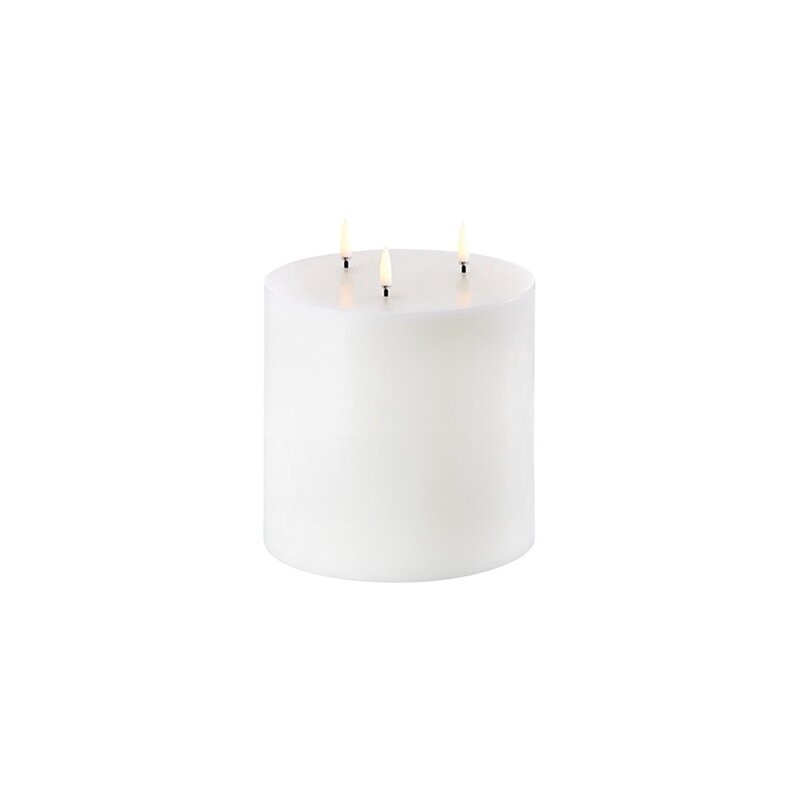
One way we can visualize the Trinity is to look at a three-wicked candle. There is only one candle, but three individual and distinct flames. Each flame draws its life from the same wax. Each flame produces its own light and the flames never compete against one another. The wax they melt combines into one pool, indistinguishable from the other.

One candle - One God

Three flames - Three Persons of God, Father, Son, and Holy Spirit

The pools of melted wax - Three individual wills, separate but indistinguishable from one another.

Tuesday, April 2, 2024

Fulfilling the Law

“Do not presume that I came to abolish the Law or the Prophets; I did not come to abolish, but to fulfill. For truly I say to you, until heaven and earth pass away, not the smallest letter or stroke of a letter shall pass from the Law, until all is accomplished!”

Matthew 5, 17-18

The Mosaic Law was given to the tribes of Israel for a couple of different reasons. The first was to direct them how to live in right relationship with God and with one another. A secondary reason was to set them apart from the rest of the world. This was to keep them from becoming like the world, which ultimately leads away from God. They were meant to be the shining example of how humans were supposed to live. The Law itself did not set the tribes of Israel apart from the world but it was their obedience to God in following the Law that did.

Jesus told his disciples that he did not come to abolish the Law, but to fulfill it. Even the most scrupulous Jew, who followed every jot and tittle of the Law, did not fulfill it. What made Jesus’ observation of the Law different?

One of the greatest Hebrew words is hesed. There is no direct translation of the word hesed into English. Words like mercy, love, compassion, grace, and faithfulness relate to the word hesed, but none of these fully grasps the concept. Hesed describes a sense of love and loyalty that inspires merciful and compassionate behavior towards another person. I have heard it said that being hesedic means to do more than the Law requires. To be called hesedic is one of the greatest compliments a Jew can give you.

Yet, Jesus teaches us of an even greater love than hesed. The Greek word used is agape. For Christians, agape is sacrificial love. It is the total giving of self for another. Hesed is the highest form of natural love. Agape is the fulfillment of hesed and is the perfect, supernatural love. God is agape. God is perfect, sacrificial love that knows no bounds.

So how did Jesus fulfill the Law? Jesus was the living Law come down from heaven. Being sacrificial love himself, he did not simply observe the Law but he lived the Law sacrificially. When fulfilled, the Law is not an observation that initiates an inward action. The Law is meant to be the beginning of sacrificial love, not just towards God, but towards all of creation. The Law, when lived inwardly, is useless. As we see in many of the scribes and Pharisees of Jesus time, their hearts were closed to sacrificial love due to their pride of inward observance to the Law. St. Paul is our greatest example of someone puffed up with pride in his scrupulous observance of the Law. He cast it all aside when he learned of agape and the true reason for the Law.

As Christians, we are not called to simply obey the Ten Commandments. We are called to fulfill the Commandments. We fulfill the Commandments the same way Jesus did. We live them sacrificially. To sacrifice for the Law means to put the object of the Law before ourselves. Most of us are casual observers of the Law, obeying what it says when it aligns with our lifestyles.

Take for instance the first commandment – You shall have no other gods before me. Most of us can recognize the command to worship God. How often does this command fall second to sleeping in on Sunday, attending youth sporting events, vacations, skipping Mass because we don’t like the weather, or for fear that we may catch whatever illness is making the rounds? No one expects anyone to put their life at risk by traveling during inclement weather. Keeping people healthy was one of the reasons we were given when Mass was suspended during the covid chaos. But, to follow this commandment sacrificially means we need to be willing to die to worship our God. This is something our brothers and sisters in Africa do every day. They do not hesitate to walk eight or ten miles in all kinds of weather to attend a Mass, that if they were discovered, they would be martyred for their faith. To love God above all other things includes our very lives.

Fulfilling the commands sacrificially also extends to the commands we were given for how we live in right relationship with one another. Thou shall not commit adultery; the six commandment. For someone obeying the Law this means not to cheat on one’s spouse. For someone living sacrificially, we fulfill this command by giving our lives for our spouse. We love them by serving them. We are willing to die for them if necessary. When a spouse is sacrificing for another divorce, is not only not an option, it is not even a thought.

Because he fulfilled the Law through sacrificial love, Jesus was able to boil the whole law down to just two commandments –

“But when the Pharisees heard that Jesus had silenced the Sadducees, they gathered together. And one of them, a lawyer, asked Him a question, testing Him: “Teacher, which is the great commandment in the Law?” And He said to him, “‘You shall love the Lord your God with your whole heart, and with your whole soul, and with your whole mind.’ This is the great and foremost commandment. The second is like it, ‘You shall love your neighbor as yourself.’ Upon these two commandments hang the whole Law and the Prophets.”

Matthew 22: 34 – 40

We are to love both God and each other with the same love God has for us; agape, complete sacrificial love. This is what it means to fulfill the Law.

Wednesday, December 6, 2023

Oath to the Death

An African priest was praying before the Blessed Sacrament in the chapel in his small village. A gunman entered the chapel and ordered the priest to his feet.

“Why do you kneel before a piece of bread?” the gunman asked. “Kneel before me instead.” .

“This is not a piece of bread,” the priest responded boldly. “This is the body, blood, soul, and divinity of my Lord Jesus Christ. I will only kneel to him.” .

The gunman laughed. “Do you actually believe that is Jesus?” he chuckled. “I will prove to you that it is just bread. When I shoot it, it will just crumble and break. It will not scream. It will not bleed. If I shoot you, you will scream and bleed and plead for your life.” .

The priest stepped between the Blessed Sacrament and the gunman. “If you must shoot someone, shoot me instead,” the priest begged. .

“Are you willing to die for this piece of bread?” the gunman said in disbelief. .

“When you look at the Blessed Sacrament all you see if a piece of bread. I believe that this is Jesus himself. I believe this because he tells me it is so. I trust Jesus when he says that this is his body and his blood. I believe in my head and I trust in my heart. I love him even more than I love my own mother. He died for me. I am willing to die for him. You think the worst you can do is to take my life from me but in doing so you free me to be with him. I do not fear this. Do what you came here to do.” .

The gunman lowered his rifle and stared at the priest. He stared quizzically for a moment. He shook his head, and turning, he walked out of the chapel and left the village. .

In the Lord’s Prayer we ask the Lord not to lead us into temptation. In Greek, the prayer asks that we not be put to the test. The test we ask not to be put through is the test of Peter. When facing death, will we deny Christ? As bold as we believe ourselves to be, none of us knows how we will answer that question until it is put to us. If a gunman were to walk into Mass and order anyone who believes that Jesus is truly present in the Eucharist to stand and be shot for their belief would you be willing to stand when simply sitting would save your life? .

Yet, that is the statement we make when we present ourselves to receive him in Holy Communion. We don’t go to communion just to get something. The Eucharist is a Sacrament and a Sacrament begins with an oath to the death. Before we receive the Lord in the Eucharist we renew our oath to live for him and die for him if necessary. We reaffirm this oath with our “Amen” after the communion minister says, “The body of Christ.” .

There is a desire within the Church today to give the Eucharist to as many people as possible. There are many who support, and even demand, that the Church give the Eucharist to divorced and remarried Catholics, to those who embrace a same-sex lifestyle, to those living together playing house, and those who are transgendering, just to name a few. There are even those who want to open up Holy Communion to those who are not even Catholic. These desires are founded in a false sense of love. We want to be inclusive. To share Jesus with everyone regardless of belief. This is a noble thing but one that lacks understanding of what receiving the Eucharist actually is. .

To receive the Eucharist is to take an oath to the death that one will live for Christ and die for him if necessary. We offer our lives as collateral when we take this oath and when we willfully break this oath we forfeit that collateral. To live for Christ means to follow his commands and his teachings to the best of our ability. We believe that Jesus taught his disciples and that these teachings have been handed down to us through his Church. When someone disagrees with an official Church teaching they do not disagree with the Church. They disagree with Jesus. .

It would be wrong for the Church to demand that anyone take an oath to the death when they either do not understand what that oath requires or they do not believe what the Church teaches. You cannot be in communion with Christ and his Church if you do not believe what they proclaim and teach. .

The Church is currently in the middle of a three-year Eucharistic revival. This is meant to renew our love and reverence for the source and summit of our Catholic faith – Jesus in the Eucharist. This renewal has to begin with a proper understanding for what the Eucharist is and the oath we take when we receive him. We need to receive Jesus on his terms, not ours. Even the manna that came down from heaven to sustain the tribes of Israel had rules for its collection and consumption. The Eucharist is the true bread that comes down from heaven. To receive him properly is to have life within you. We eat to our condemnation every time we receive him improperly. It is false love to allow someone who is not properly disposed to receive Holy Communion. .

We are called to love one another with the same love God has for each of us. We are called to love one another with sacrificial love. True love is not giving someone something that will do them harm. To truly love someone is to keep from them something that will do them hard regardless of how much they want or demand it. .

Remember this the next time you present yourself to receive Holy Communion. Ask yourself, “If I had to be shot after receiving Jesus would I still be in this line?” If the answer to that question is no you shouldn’t be in that line. .

Saturday, July 22, 2023

Conduit of Grace

I am not big into crowds. Luckily my favorite grocery store is open twenty-four hours so I can do my shopping during the hours most people are curled up on the couch watching T.V. During one such visit I noticed a man and his son also doing some late-night shopping. It was easy to see that the son was autistic. One thing he liked to do was to go up to the strangers in the aisles and introduce himself. His father tried his best to keep his son away from the other shoppers.

It wasn’t long and our paths would cross. When the son saw me, he immediately made a bee-line straight towards me. The father quickly came around the cart in a vain attempt to intercept his son. I could see the worry in his eyes. I just nodded and said it was ok.

The boy came up to me and stuck his hand out. When I shook his hand, I understood the father’s fear. He had the grip of a bear and the hands to match. He was not only a big boy, but one with great strength. Given his mental capacity he could easily hurt someone without knowing it. I am sure the father’s fear was twofold. First, he was worried about how strangers would react to his son. People can be cruel and I am sure he had seen his share of that cruelty towards both himself and his son. He also had to be worried about what his son might do to someone less than thrilled to make his acquaintance.

The son would take my hand and shake it. Then he would let go for a moment and then grab my hand and shake it again. He kept doing this until his father was able to guide him back to their cart. I asked him his name. It was John. I smiled and told him I was very pleased to meet him. Then I turned to his father and asked his name. He was Russ. I told Russ that he was a good father for caring for his son the way he was.

This would be the first of several encounters I would have with Russ and John. The next time I ran into them John rushed over to shake my hand as if it were the first time. Russ quickly came over to guide his son back. The worry in his eyes went to surprise when I greeted John by his name and asked him how he was doing. His mouth hung open when I turned to him and did the same. He sheepishly looked down and told me that he did not remember my name. I assured him that it was fine; that it was he and his son who made an impact on my life.

Recently, I took communion to a man who had just suffered a severe stroke and was recovering in a rehab facility. I saw the look of sadness in his eyes that I often see in people in his situation. There is a feeling of shame that they have to be cared for by others. This is especially common in men who have provided for the people they love their entire lives. Now they themselves need to be cared for and they feel like a burden on all those around them.

I encouraged the man not to be downhearted. He was not useless. He was not a burden on his wife or the caretakers at the facility he was in. He did not understand that he was serving a very important purpose. People like John and this man, those who require the assistance of others, they act as conduits of God’s grace to flow to those who care for them. God is sacrificial love and love is never wasted with God. God’s favor shines down on those who care for others out of love.

The look in the man’s eyes suddenly changed. I saw a sense of relief come into them. The man realized that his suffering had a purpose and that purpose was to bring God’s grace to the woman he loved the most in this world. This was something he could be thankful for.

We do not suffer for suffering’s sake. Our suffering isn’t without purpose. It is if we hold on to our suffering, refusing to offer it as a gift. The devil wants us to turn our suffering inwards, to keep it as our own. Suffering is the currency of love. Money we keep in a jar under our bed has no value. The value of currency is what we choose to spend it on. The best spent money is the money used for the betterment of another. Like with any other currency, we can offer our suffering for a greater good. When we allow others to care for us in our suffering God’s favor flows through us to them. They receive a blessing for the love they show and we receive a blessing for our cooperation with God’s will.

This is what made Christ’s passion so powerful. Jesus held none of his suffering back for himself. He offered all of his suffering for the love of us. It is through his suffering that the wages of sin were paid, death was conquered, and the blessing of everlasting life flow through him to us.

Jesus gives us the perfect example on how to embrace our suffering with joy, offering it to God so he can use it to deliver his grace to those who care for us with love. It also gives us reason to be joyful and loving caregivers to those in need, especially those who are the most difficult to care for. Both the caretaker and the cared-for receive grace when suffering, the currency of love, is offered for the other.

Go and be a blessing to all those you meet today.

Monday, April 10, 2023

The Reason

“Now the LORD said to Moses and Aaron in the land of Egypt, “This month shall be the beginning of months for you; it is to be the first month of the year for you. Speak to all the congregation of Israel, saying, ‘On the tenth of this month they are, each one, to take a lamb for themselves, according to the fathers’ households, a lamb for each household. Now if the household is too small for a lamb, then he and his neighbor nearest to his house are to take one according to the number of persons in them; in proportion to what each one should eat, you are to divide the lamb. Your lamb shall be an unblemished male a year old; you may take it from the sheep or from the goats. You shall keep it until the fourteenth day of the same month, then the whole assembly of the congregation of Israel is to slaughter it at twilight. Moreover, they shall take some of the blood and put it on the two doorposts and on the lintel of the houses in which they eat it. They shall eat the flesh that same night, roasted with fire, and they shall eat it with unleavened bread and bitter herbs. Do not eat any of it raw or boiled at all with water, but rather roasted with fire, both its head and its legs along with its entrails. And you shall not leave any of it over until morning, but whatever is left of it until morning, you shall completely burn with fire. Now you shall eat it in this way: with your garment belted around your waist, your sandals on your feet, and your staff in your hand; and you shall eat it in a hurry—it is the LORD’S Passover. For I will go through the land of Egypt on that night, and fatally strike all the firstborn in the land of Egypt, from the human firstborn to animals; and against all the gods of Egypt I will execute judgments—I am the LORD. The blood shall be a sign for you on the houses where you live; and when I see the blood I will pass over you, and no plague will come upon you to destroy you when I strike the land of Egypt.”

Exodus 12: 1-13

The Passover is a holy Jewish holiday that remembers when God freed Israel from their slavery to Egypt. Understanding the Passover is essential to understanding the crucifixion of Jesus and the Catholic Holy Sacrifice of the Mass that followed. The Holy Sacrifice of the Mass is what sets Catholics apart from the rest of Christianity. If Jesus’ crucifixion truly fulfills the Jewish Passover, then the Catholic Holy Sacrifice of the Mass is essential to Christian salvation and redemption.

Christ’s crucifixion not only fulfills the Jewish Passover, but it also completes the Binding of Isaac. All four of these events, the Binding of Isaac, the Passover, the Crucifixion of Jesus, and the Holy Sacrifice of the Mass, are all sacrifices prescribed by God for the salvation of his people. When Abraham was willing to sacrifice his first born to God, the son God promised to give him in his old age, he demonstrated the faith needed for God to carry out his plan of salvation for the world. Just as an angel held back Abraham’s hand from sacrificing Isaac, God held back the angel of death from taking the first born of anyone who observed the rubrics of the Passover. In the fullness of time, God sent his only begotten son to take the place of Isaac and those spared in the Passover, to complete the sacrifice necessary for salvation. The Holy Sacrifice of the Mass makes Christ’s crucifixion present to us in real time so that we may participate in it. If we want to understand the requirements of salvation, we have to understand what a sacrifice is.

A sacrifice is a religious act, by which a visible gift is offered to God by an authorized person and then destroyed in some way, so that God may be worshipped and loved.

First, a visible gift is required. This is something material and tangible. The gift must be something of value. Offering a gift we hold no value in is not truly a gift. The greater the value, the greater the gift.

Second, the gift must be offered up to God. The sacrifice is not so much in the gift but the offering of it. The act is more important than the gift.

Third, the gift must be offered by an authorized person. God has said who is authorized to offer sacrifice on behalf of the people. In the days before Jesus the authorization to offer sacrifice was given to the sons of Aaron, the men from the tribe of Levi. Jesus is the great high priest from before time began. When he established his Church on earth, he gave the authority to offer sacrifice to those he ordained for the task. He did so through the laying on of hands and by breathing into them the Holy Spirit. Christ’s priesthood is not through a bloodline but in the line of Melchizedek, a superior priesthood to the one of the Levites. This authority has been handed down through apostolic succession and resides in the Catholic priesthood today. Jesus did not make us all priests authorized to sacrifice of the behalf of the people. The priesthood we receive at baptism is one that allows us to live a sacrificial life for Christ.

Fourth, the visible gift offered to God by an authorized person must be destroyed in some way. Under the old law animals were slain and burned. Isaac would have been slain and burned. In the Passover a lamb was slain, roasted, and eaten by the people. Anything left over was burnt completely before sunrise. Christ was crucified. In the Holy Sacrifice of the Mass, the hosts, a word meaning victim, are consumed as part of the Sacrifice. The reason why the offering is destroyed, either entirely or partially, is to acknowledge God’s supreme dominion and to worship and love him as the Lord of life and death.

Under the old law, God had prescribed how the sacrifice was to be done, who was authorized to do the sacrifice, and where the sacrifice must take place. When the temple was destroyed, the Jews lost the ability to offer sacrifice to God. In rising from the dead, Jesus rebuilt the temple in himself and authorized a new priesthood to authorize sacrifice on behalf of the entire world. The Holy Sacrifice of the Mass makes present to us in our time and place the one and only sacrifice of Christ on the cross at Calvary. His crucifixion is made present to us so that we may participate in it. It is only by being crucified with Christ that we can rise with him in resurrection into salvation.

The angel of death did not pass over any house of any Jew who did not follow the rubrics as commanded by God regardless of how righteous they may have been. Likewise, Jesus was also very clear when he said what was required for salvation.

“Then the Jews began to argue with one another, saying, “How can this man give us His flesh to eat?” So Jesus said to them, “Truly, truly, I say to you, unless you eat the flesh of the Son of Man and drink His blood, you have no life in yourselves. The one who eats My flesh and drinks My blood has eternal life, and I will raise him up on the last day. For My flesh is true food, and My blood is true drink. The one who eats My flesh and drinks My blood remains in Me, and I in him. Just as the living Father sent Me, and I live because of the Father, the one who eats Me, he also will live because of Me. This is the bread that came down out of heaven, not as the fathers ate and died; the one who eats this bread will live forever.”

John 6: 52-58

Jesus did not mean this metaphorically. He did not mean this symbolically. Just as the Jews had to consume the Passover lamb, so too must we consume the Pascal Lamb of God if we do not want the angel of death to have claim to us when we die.

Scripture tells us that many of those who were following Jesus found this statement to be very offensive and difficult to hear. They left Jesus that day. The Twelve did not understand what Jesus meant, but they believed in him and did not leave. Later, at the last supper, Jesus would establish the Sacrament of the Eucharist and institute the priesthood, giving his priests the authority to consecrate bread and wine into the body and blood of Jesus.

The only place where we are given Jesus’ body to eat and his blood to drink is at the Holy Sacrifice of the Mass where a priest, authorized by Jesus through his ordination, consecrates simple bread and wine into the body, blood, soul, and divinity of Jesus our high priest in the order of Melchizedek. The Eucharist is the source and summit of the Catholic faith. This was the teaching of the Catholic Church for 1500 years.

Then the devil played upon the pride of the fathers of the reformation. He convinced them that it was no longer necessary to eat the flesh of the son of man in order to have eternal life. The first thing Luther did was to remove the Sacrament of the Holy Eucharist and he changed the Mass from a sacrifice into a service for the instruction of the faithful. Wesley, Calvin, and Knox did similar things when they formed their new churches. Communion became nothing more than a symbolic remembrance of the last supper. The only thing required to enter heaven is a simple profession of faith in Jesus.

The Jews who did not follow the rubrics given to them by God for the Passover woke the following morning to find that the first born of every creature inside their houses had been taken by the angel of death in the darkness of night. Those who refuse to consume the body and blood of Jesus can only rely on his mercy not to pass them over when he returns to judge the living and the dead at the end of this age.

The Eucharist is the reason to become Catholic. The Eucharist is the reason to stay Catholic. The Eucharist is the reason to live as a Catholic.